
The Guardian | Published May 15, 2026 By Tim Banks
In my last article, I wrote about the risks of the government stepping too far into commercial development. I focused on one building, the Atlantic Technology Centre. But the issue is broader. One of the main drivers of commercial development in Charlottetown has lost its way: the Charlottetown Area Development Corporation.
The CADC was created in 1974 to do something specific. It emerged from the Comprehensive Development Plan of the 1960s, a serious effort championed by visionary Premier Alex Campbell, who was arguably one of our best premiers. The goal was clear: diversify and strengthen Prince Edward Island’s economy by assembling land, taking calculated risks, and helping shape a more vibrant capital city.
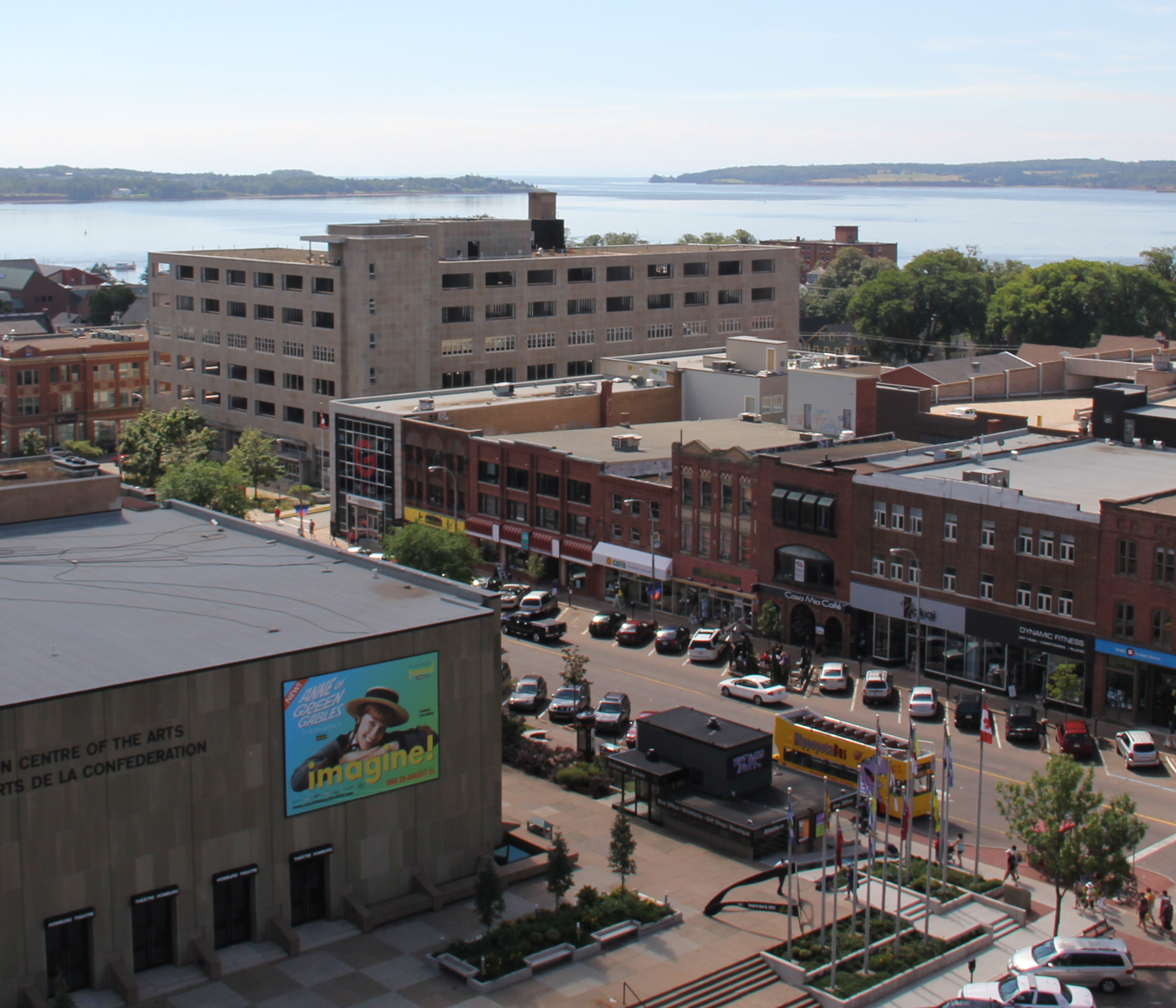
And for a time, it worked. The CADC played a central role in transforming Charlottetown’s waterfront from an industrial backdoor into a public and economic asset. Confederation Landing, Peake’s Wharf and the Convention Centre were not accidents. They reflected a clear mandate, backed by leadership that understood both public purpose and market reality.
Experienced leaders
That leadership was not incidental. The CADC was guided by experienced business people, including its first chair, David A. Darby, and sharp businessmen like Fred Hyndman. The model was straightforward: set direction, apply discipline and execute projects that would not happen otherwise.
But somewhere along the way, that clarity was lost. Today, it is difficult to define the CADC’s role. It owns assets and undertakes projects. But it no longer appears to lead with a clear vision for the city or the region. Instead, it feels like a reactive organization shaped by political direction rather than grounded, independent judgment.
That shift shows up most clearly on the waterfront. In 2011, the Eastern Gateway Waterfront Master Plan laid out an ambitious vision for the next phase of Charlottetown’s development. The plan envisioned a second wave of city-building: public space, private investment, and a reconnected urban fabric extending beyond the successes of the original waterfront redevelopment.
For more than two decades, the CADC was the lead agency driving waterfront development. It had the mandate, the independence, and the discipline to move projects forward. Today, that leadership is no longer evident.
Too many cooks
The waterfront is now the responsibility of multiple players, the city, the province, federal partners and the CADC among them. But when responsibility is spread across everyone, accountability tends to rest with no one. The result is a plan that exists on paper, but lacks a clear engine to bring it to life.
This is not a criticism of any single project or decision. It is a structural problem. Charlottetown once had an organization designed to lead complex development. Today, it has a collection of organizations, none of which appear to be clearly in charge. The CADC was never intended to be a holding company for marginal assets or a vehicle for ad hoc development. Its role was to act as a catalyst: to move first, unlock opportunity, and set a standard others could build on. That requires independence, discipline and leadership prepared to say no as often as yes.
Charlottetown has changed since 1974. The private sector is stronger. The opportunities are different and the access to financing is ever-changing. But the need for clear thinking and focused execution has not.
As the Lantz government and others respond to auditor general Darren Noonan’s concerns about the province’s growing deficit, the pressure to demonstrate value in public investment will only increase. We cannot afford to tie up capital in projects without a clear purpose or return. Every dollar must work.
But, again, who is the leader here? And how do we unlock this potential?
Economic momentum
At its best, the CADC answered that question. It brought together public purpose and private-sector discipline to deliver real results. That model still has value, but only if it is allowed to function as intended, and only if it is led by people with the experience to make difficult, grounded decisions without political interference.
If we want to avoid more projects that fail basic commercial scrutiny, the CADC needs to return to a clear mandate, independent governance and disciplined execution. That means being honest about what it should own, what it should develop and what it should step away from.
Public development corporations should not become long-term holding companies for aging assets. In my view, any CADC property held longer than five years should be evaluated for sale, with capital recycled into new projects that create economic momentum and public value. Development agencies are supposed to move opportunities forward, not sit on them indefinitely.
It also means rebuilding the organization around people who understand development, finance, risk and long-term city building, including experienced voices from outside P.E.I. who can bring fresh perspective and commercial discipline.
Most importantly, it means finding leadership with proven development experience and vision to move projects forward instead of managing stagnation.
Charlottetown’s waterfront did not transform itself the first time. It happened because capable people were trusted to lead.
That is what is missing now.
Tim Banks is the CEO of APM MacLean and lives in Charlottetown.